
How to Choose the Right Glass for Your Space
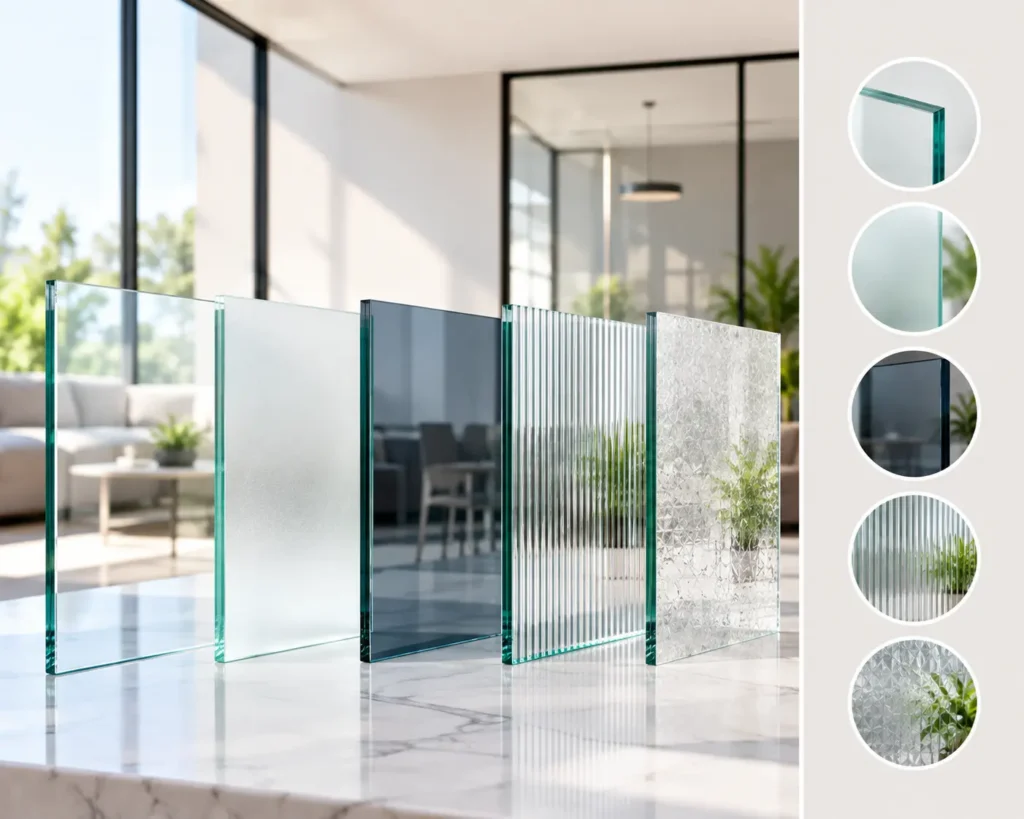
The glass you choose decides how your partition looks, how private the space feels, how safe it is, and how well it handles light and noise. Yet many people pick glass only by appearance and later wish they had thought about privacy, safety, or glare.
At Smartglass Studio, we help homeowners and businesses in Faridabad and nearby areas choose glass that suits their space, budget, and daily use. This guide explains the main glass options in simple terms so you can decide with confidence.
Start with Three Questions
Before comparing glass types, answer these:
- What is the main purpose? Privacy, light, safety, noise control, or style?
- Where will it be used? Living room, bedroom, bathroom, kitchen, office cabin, or meeting room?
- Who uses the space? Do children, customers, or heavy foot traffic make safety a priority?
Your answers will narrow the choice quickly.
Glass by Look and Privacy
Clear Glass
Clear glass gives full transparency and the most open look. It lets in maximum light and makes small rooms feel bigger.
- Best for: living and dining dividers, reception areas, showrooms, balcony enclosures
- Keep in mind: offers no visual privacy, and shows fingerprints and dust more easily
Frosted Glass
Frosted glass has a soft, matte surface that blurs what is behind it. It lets light through while hiding details.
- Best for: bathrooms, bedrooms, consultation rooms, meeting rooms
- Keep in mind: gives a softer look than clear glass, and some types need gentle cleaning to avoid marks
Reeded (Fluted) Glass
Reeded glass has vertical grooves that distort the view while still letting light pass. It is a popular design choice for modern homes.
- Best for: wardrobes, entrance dividers, study areas, kitchen partitions, decorative accents
- Keep in mind: privacy level varies with the groove style and depth, so ask to see a sample
Tinted Glass
Tinted glass comes in grey, bronze, or green shades. It reduces glare and adds a stylish, premium look.
- Best for: offices, sunlit rooms, executive cabins, partitions near windows
- Keep in mind: darker tints reduce light, so use them carefully in small or dim spaces
Decorative and Printed Glass
Patterns, textures, and printed designs add personality and privacy at the same time.
- Best for: restaurants, boutiques, hotels, feature walls, branded spaces
- Keep in mind: very busy patterns can feel heavy in compact rooms
Glass by Safety and Strength
Toughened (Tempered) Glass
Toughened glass is heat-treated to be several times stronger than ordinary glass. If it breaks, it shatters into small, blunt pieces rather than sharp shards.
- Best for: most partitions, doors, bathrooms, and any high-traffic area
- Keep in mind: it cannot be cut or drilled after toughening, so measurements must be accurate before fabrication
Laminated Glass
Laminated glass has two or more glass layers bonded with a clear interlayer. If it breaks, the pieces stay stuck to the layer instead of falling.
- Best for: homes with children, offices with heavy movement, areas needing better sound control and added security
- Keep in mind: usually costs more than single toughened glass
Toughened vs Laminated: Quick Comparison
| Feature | Toughened Glass | Laminated Glass |
|---|---|---|
| Strength | High | High, with added holding strength |
| When broken | Breaks into small blunt pieces | Cracks but stays held by the interlayer |
| Sound reduction | Moderate | Better |
| Cost | Generally lower | Generally higher |
| Best for | Everyday partitions, doors | Safety-critical, noise-sensitive spaces |
Performance and price vary by thickness and specification, so confirm details with your supplier.
Double-Glazed (Insulated) Glass
Two glass panes with a sealed gap between them improve sound and heat insulation. It is usually used where acoustic comfort matters most, like recording corners, conference rooms, or rooms facing busy roads.
How Thick Should the Glass Be?
Thickness affects strength, stability, and sound reduction. As a general guide:
- 8 mm to 10 mm: common for sliding and fixed residential partitions
- 10 mm to 12 mm: suited to larger panels, office partitions, and glass doors
- Laminated or double-glazed options: chosen for higher acoustic or safety needs
The right thickness depends on panel size, frame type, and usage, so always confirm with your installer after site measurement.
Best Glass Choices by Space
| Space | Recommended Glass |
|---|---|
| Living and dining room | Clear or lightly tinted toughened glass |
| Bedroom | Frosted or reeded toughened glass |
| Bathroom | Frosted toughened glass |
| Kitchen | Clear, reeded, or tinted toughened glass (easy to clean) |
| Home office or study | Reeded or frosted glass; laminated if noise is a concern |
| Balcony enclosure | Clear toughened or laminated glass |
| Office cabin | Clear or frosted toughened glass, with a manifestation strip or film |
| Meeting room | Laminated or double-glazed glass with frosted sections |
| Clinic or consultation room | Frosted or laminated glass |
| Showroom or retail | Clear toughened glass; decorative accents |
Other Things to Consider
- Light and glare: South- or west-facing rooms may benefit from tinted glass.
- Maintenance: Clear glass shows marks easily, while reeded and lightly textured glass hides them better.
- Budget: Toughened clear glass is usually the most economical. Laminated, double-glazed, and decorative options cost more.
- Frame match: Pair the glass with the right frame colour. Black frames suit clear and reeded glass, while silver or champagne frames suit tinted and frosted options. See our Aluminium Partition Systems Buying Guide for frame ideas.
- Opening style: Sliding and folding systems carry glass weight differently, which affects thickness. Our Sliding vs. Folding Partitions guide explains the difference.
Common Mistakes to Avoid
- Picking only by appearance and ignoring privacy or safety
- Using clear glass in bedrooms or bathrooms
- Choosing very dark tints in small, low-light rooms
- Using thin or untoughened glass for doors and large panels
- Skipping accurate measurements, which cannot be corrected after toughening
- Choosing low-grade glass to save money, then paying for replacements later
Simple Care Tips
- Clean with a soft microfibre cloth and mild glass cleaner
- Avoid abrasive scrubbers and harsh chemicals
- Wipe frosted and reeded glass gently along the texture
- Check seals and edges from time to time
Why Choose Smartglass Studio in Faridabad?
Choosing glass is easier with expert guidance. At Smartglass Studio, we:
- Understand how you use your space before recommending options
- Suggest the right glass type, thickness, and finish for your budget
- Use safe, quality glass with reliable frames and hardware
- Handle measurement, fabrication, and installation with care
- Serve homes and businesses in Faridabad and nearby areas
Want to plan your budget? Read our Partition Cost Guide.
Conclusion
The right glass makes a partition more private, safer, and better looking. Think about purpose, location, safety, and budget, and the choice becomes simple: clear for openness, frosted or reeded for privacy, tinted for glare control, toughened for everyday strength, and laminated for extra safety and sound comfort.
Not sure which glass suits your space? Contact Smartglass Studio for a free consultation and quote and we will help you choose the right option for your home or workspace in Faridabad.
Frequently Asked Questions
1. Which glass is best for a partition?
Toughened glass is the most common and practical choice. Laminated glass is better where extra safety or sound control is needed.
2. Which glass gives the most privacy?
Frosted glass gives strong privacy. Reeded glass also offers good privacy, depending on the groove style.
3. Is toughened glass safe?
Yes. It is much stronger than ordinary glass and breaks into small, blunt pieces if damaged.
4. What is the difference between toughened and laminated glass?
Toughened glass is heat-treated for strength. Laminated glass has a bonded interlayer that holds the pieces together if it cracks, and it generally reduces sound better.
5. Does glass thickness matter?
Yes. Thickness affects strength, stability, and sound reduction. Your installer will recommend the right thickness for your panel size and use.
6. Will tinted glass make my room dark?
Light tints usually don’t, but darker tints can. Choose carefully for smaller rooms.
7. Can you help me choose glass for my home or office in Faridabad?
Yes. Smartglass Studio serves Faridabad and nearby areas. Contact us for guidance and a free consultation.